At one time, being called an asshole meant you’d crossed a line. Now it’s practically a compliment. As you know, many have turned such antisocial labels into badges of honor. People literally buy yard signs and bumper stickers to brag about being “Nasty Women” or “Deplorable.” What used to be an insult is now a kind of twisted self-promotion that says, “I’m a badass who doesn’t care what you think.”
It’s a defense mechanism that is hard to challenge, and it leaves a lot of unresolved tension in public discourse. How do you reach or try to understand someone who embraces their crassness with such pride? The answer isn’t to hurl more labels, but to recognize what their labels are hiding: a deeper unhappiness they may not even see in themselves.

When a high-profile figure like Charlie Kirk is murdered publicly, it’s disturbing but revealing to watch how many “normal” people cheer it on. People with no direct experience of violence or murder will laugh, meme it, and take pleasure in the moment. These aren’t combat-hardened soldiers or survivors of war we’re talking about; they’re office workers, teachers, students, and neighbors.
Why?
The answer, I believe, is biological. But technology turned that biology into a slot machine in their pockets.
Dopamine is the brain’s chemical tied to anticipation and reward. It spikes when they win a game, when they gamble and hit a jackpot, when they get likes on a post. That surge doesn’t feel like calm satisfaction. Instead, it feels electric. A small rush of excitement that compels you to want more. It’s the same spark you feel when your team scores a last-second touchdown. Neuroscientists describe dopamine less as the “pleasure chemical” and more as the motivation chemical. It doesn’t just make you feel good, it drives you to repeat the behavior that caused the spike. But it doesn’t discriminate between healthy rewards and toxic ones. It just rewards whatever feels like a “win.”
In a politically polarized society like ours, little wins are always within reach. Opposing groups can be summoned from their pocket at any moment, 24/7, offering a fresh enemy to fight and another quick hit of victory. Each win is small but rewarding.
So when someone they dislike on the opposing team is humiliated or harmed online, it gives them the same quick jolt of novelty and satisfaction my dog gets when I throw him a ball. To an unhappy person whose daily life feels dull or empty—or to a simple-minded dog—that jolt is pure gold. It’s a drug. People even joke about injecting moments like that straight into their veins. It’s their heroin.
But what makes it worse is that many of these people have spent so much time online, exposed to violent images and chaos, that their brains have started to see suffering as just content. They’ve become desensitized. Also, because the violence is happening far away, empathy simply doesn’t kick in. The brain’s compassion circuits might have lit up if they were physically present to hear the screams, see the blood, or witness traumatic grief from the victim’s loved ones in real time. Online, none of that reaches them. It’s just pixels. More content. All that remains is dopamine, unchecked by empathy.
Don’t get me wrong, there are times in history when cheering a death could make grim sense. If you were a Cambodian survivor of the Khmer Rouge watching the execution of the prison guard who murdered your family, your reaction would be an understandable sense of vengeance, grief, and a kind of closure. For people who have lived under tyranny, celebrating a death can be tangled up with survival itself.
But what we’re seeing today in America is different. We’re not talking about survivors of genocide or citizens rising up against a murderous dictator. We’re talking about thriving small business owners, teachers, and students—people living in comfort and peace in 2025. And yet the death of a man like Charlie Kirk—someone who openly engaged in debate, who provoked, but who never physically harmed anyone or had the power to do so—becomes a cause for celebration.
So the cheering you’re witnessing isn’t power or courage. It’s chemical dependence. It’s unhappiness and desensitization outsourcing itself to pixels for relief.
I think it’s better to see the unhappiness beneath their cruelty than to meet it with more cruelty of your own. It will certainly help you sleep better at night knowing that you’re actually not surrounded by legions of cruel people, just perhaps mobs of joyless ones.
If you need more evidence, a quick trip to Kroger will tell you all you need to know. Coast through the aisles and look at the faces. Nobody is burning with passion or seething with hatred. They just look… tired. Bored.
And if you try to call them out on their cruelty, it won’t work—for two reasons. First, they probably aren’t actually cruel, and they know it. They’re just unhappy and addicted. Second, cruelty has become cool anyway. It’s performative, and society rewards it.
But call them unhappy and it might keep them up at night. Unhappiness can’t be worn like a badge. It’s too raw, too revealing. It points to failure, emptiness, and lack of control. All the things we work so hard to hide.
Nobody wants to admit they’re unhappy. Nobody wants to admit their life choices left them bitter, resentful, and dependent on outrage and suffering for entertainment and happiness. But when you frame it this way, the mask slips.
The uncomfortable truth is that this isn’t just about “them.” Anyone can fall into the dopamine trap. In fact, if you spend more time online than you know you should, you are also probably affected in some way. I would say most of us are to some degree.
The term “touch grass” has become cliche, but it has merit. I know we all need to stay informed on some level, but pay attention to what you are injecting into your veins. What are you filling your soul with? Is it your craft, your hobbies, the people you love…or pixels of someone else’s suffering?
Your hot takes may not be as badass as you’d like to think.
They might actually be a confession of your own unlived life.
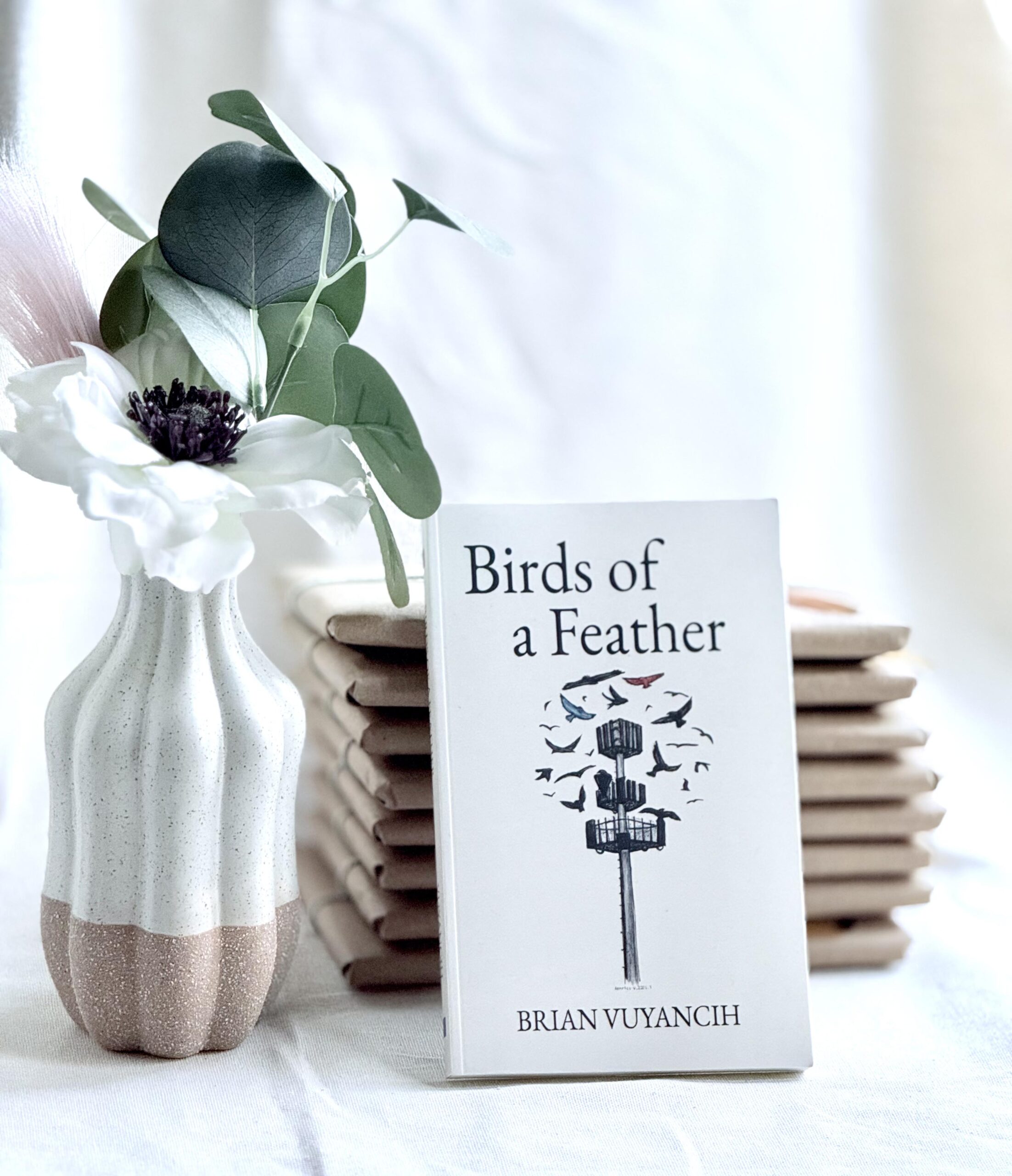
If you found this examination of online behavior and hidden unhappiness interesting, you’d probably enjoy my book Birds of a Feather. It’s a sharp, satirical story set in an Anderson Township that becomes consumed by political tribalism. The book digs into how ordinary people get pulled into outrage, status games, and performative identities until they barely recognize themselves.
It’s darkly funny, uncomfortably honest, and might just make you see your own timeline a little differently.


- Opinion | Unhappy and Addicted: The Real Reason People Celebrate Violence Online - September 12, 2025
- Signal 99: The Underground Police Network that Punches Back - February 14, 2025
- Closing the Doors: The Final Moments of Anderson Frisch’s - December 4, 2024