Following the disastrous results of the 2026 midterm elections, it seems reasonable to wonder whether the MAGA movement has officially run its course. Perhaps it isn’t entirely dead yet, but the political reckoning ought to inspire some serious reflection among those of us who still find ourselves somewhere on the political right.
And frankly, I welcome the opportunity.

I hesitate to call myself a conservative these days. Not because my value system has changed, but because Aesop was right when he observed in a story about an ass, “A man is known by the company he keeps.” I’ve always been sympathetic to certain conservative instincts: the importance of family, community, tradition, personal responsibility, and a certain reluctance to commit felonies.
But MAGA has become rather unpleasant company. An assortment of angry, abrasive, and unimaginative personalities who seem more invested in repeatedly identifying everything we already know we despise than offering a vision of something beautiful and worth preserving. This temperament has become an unmistakable feature of the movement’s public identity, particularly among its loudest and most influential voices.
For nearly a decade, the political right has celebrated brashness, crudeness, and an almost theatrical disregard for social decorum. Somehow, they came to see being offensive as a way to prove authenticity. That may have helped Trump win the White House, but winning the respect of your neighbors is another matter.
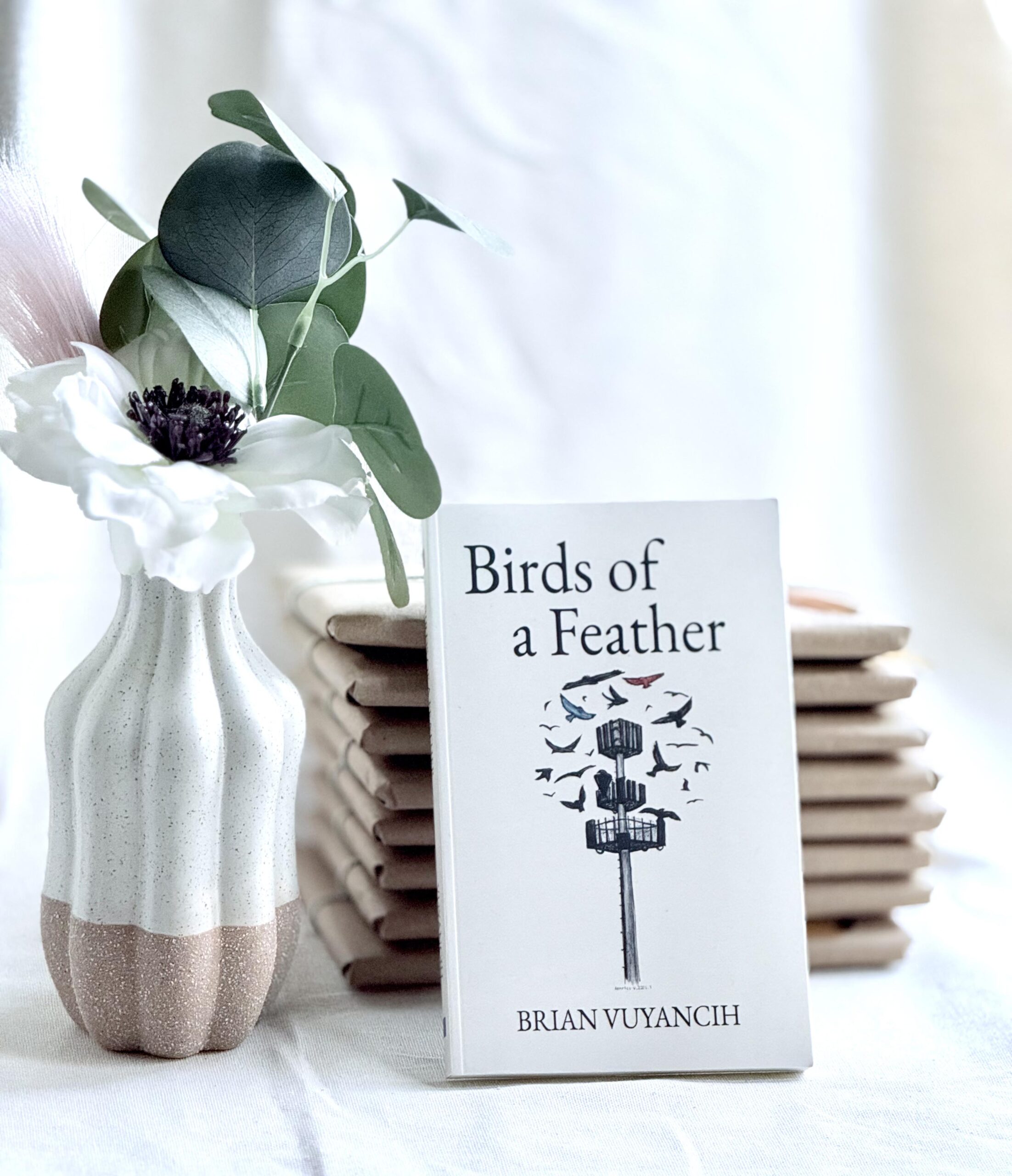
In my novella, Birds of a Feather, I describe Rusty, a particularly stubborn MAGA character, as being “like an unreachable boulder at the bottom of the sea, unyielding to current or reason.” I go on: “To Rusty, there was only one truth, Rusty’s truth.”
Rusty represents a disposition that has become all too familiar in American political discourse. You might encounter him at a community meeting or, for the less fortunate among us, across the dinner table. His natural habitat, of course, is Facebook.
I suspect most of us know a Rusty or a hundred here in Anderson.
Much of this attitude comes from an exaggerated sense of individualism, where having little regard for what others think is mistaken for strength of character. What it often projects, however, is entitlement and arrogance. Sometimes malice.
Don’t get me wrong. My objection isn’t that conservatives should be nicer. This isn’t an announcement that I’m switching sides, nor is it a plea for conservatives to become more accommodating of subversive ideas. What I’m questioning is our approach and the temperament we’ve allowed to define us. We ought to be capable of defending our principles without reducing thousands of years of Western values to an endless exercise in outrage and doom farming.
I happen to believe the right is correct about a number of important cultural and political questions. What I’d like to see is a movement capable of developing more intelligent and inspiring ideas of its own.
Too much conservative commentary has become an endless cycle of grievance. Find something objectionable, express indignation, ridicule the people responsible, and repeat the process day after day. And let’s not overlook the selfish motives behind much of this. Some commentators use their platforms to settle personal scores with people who have wronged them. Others have discovered that outrage is an effective way to cultivate celebrity and satisfy their own egos. I understand the impulse to defend oneself, but someone consumed by revenge is poorly positioned to become a serious political thinker.
And some responsibility belongs to you, the reader or follower. Every personality you promote, every voice you amplify, and every audience you help build influences the direction of the movement. You have a hand in deciding who becomes influential and whose ideas gain traction.
There’s plenty of room on the political right for serious ideas about the kind of society we want to build. But that requires imagination and a willingness to move beyond outrage and the comfort of nostalgia.
For example, what should American families and communities look like in the coming decades? How do we preserve cultural continuity and meaningful traditions in an increasingly fragmented society? What does our changing demographic landscape mean for questions of race, ancestry, and identity? What institutions deserve our loyalty, and how might we strengthen them? What institutions have betrayed us, and how might we replace them?
These are questions deserving of serious intellectual consideration. The answers won’t be found in an outburst on a podcast or one of a hundred daily reposts of discouraging news. Fear and resentment might get people to the polls, but what happens after the election? Surely our ambitions ought to extend beyond winning votes. We should be cultivating ideas that inspire people to build stronger families, better communities, and institutions worthy of their loyalty.
There is, after all, something genuinely romantic about the conservative impulse. To be fair, this is going to be a hard point to make after a decade of MAGA, but hear me out.
Think of the extraordinary cultural achievements of Western civilization, beginning with the Greeks and Romans: its literature, music, philosophy, and artistic traditions. Think of the appreciation for beauty in both the natural world and the things human beings create. The importance of family, the character of our neighborhoods, the preservation of our landscapes, the rule of law, the maintenance of public order, and the customs that give communities a sense of identity and belonging.
There is romance in the struggle to defend these things. There are people who openly despise our cultural inheritance, who regard tradition with contempt and seem to find satisfaction in dismantling the things we value. There is honor in standing against them, and we ought to celebrate that struggle. There is courage in defending something you love, and a sense of purpose in carrying it forward. That deserves to be expressed with conviction and, at the risk of alarming all the Rustys out there, even a little poetry.
Our England is a garden, and such gardens are not made
By singing:—“Oh, how beautiful!” and sitting in the shade,
Rudyard Kipling said more in two lines than Trump ever did. I wonder what he might say about American political discourse today. Maybe something like this:
Our America is a garden, and such gardens are not made
By cursing at the weeds in a hundred posts per day.
I’d like to see more conservative thinkers devote their attention to these possibilities: beautiful communities, inspiring architecture, flourishing families, and a cultural life with depth and character. There’s an entire vision of civilization here that deserves serious intellectual attention, with aspirations that could even appeal to your left-wing neighbor. After we shed our MAGA skin, of course.
Here in Anderson Township, we could start by imagining what our community might look like in twenty or thirty years, with ambitions extending beyond fast-food franchises and land development. Of course, the left might beat us to it. And frankly, an arms race between the two sides to make Anderson more livable and vibrant wouldn’t be the worst thing in the world.
Perhaps MAGA’s decline will provide an opportunity to reconsider the personalities and voices that have come to represent conservatism, from the White House to your local GOP meetings. Maybe it’s time to retire some of the professional provocateurs and habitual complainers who have dominated the public square. I know the left has their own bad actors, too, but that’s their problem.
I’d like to see new conservative writers, thinkers, and leaders emerge. People capable of articulating a future worth pursuing, rather than merely promising to restore a past that may never have existed quite as we all remember it. Many of these new conservative voices will be young, bringing fresh and challenging ideas. It will be our job to listen to and support them, giving their energy room to flourish.
If the end of MAGA creates an opportunity for that kind of renewal, then perhaps something worthwhile can emerge from its defeat.
We already know what to hate and what to fear. That’s the easy part. Now comes the hard part: remembering who we are, and becoming the kind of people worthy of our inheritance.
If you enjoyed this essay and would like to explore more of my thoughts on politics, culture, and life in Anderson Township, consider picking up a copy of my satirical novella, Birds of a Feather. Set right here in Anderson Township, the story explores the absurdities of our political and cultural divisions through a cast of characters you might find uncomfortably familiar.
Available on Amazon.

- What Comes After MAGA in Anderson Township? - November 5, 2026
- Opinion | Unhappy and Addicted: The Real Reason People Celebrate Violence Online - September 12, 2025
- Signal 99: The Underground Police Network that Punches Back - February 14, 2025